Evaluate torrefaction when the project needs a prepared solid fuel from a suitable combustible waste fraction. Compare every route using the same feed, final product, auxiliary-energy and residue boundaries.
Municipal Waste-to-Energy: Where Torrefaction Fits
In brief
Summary
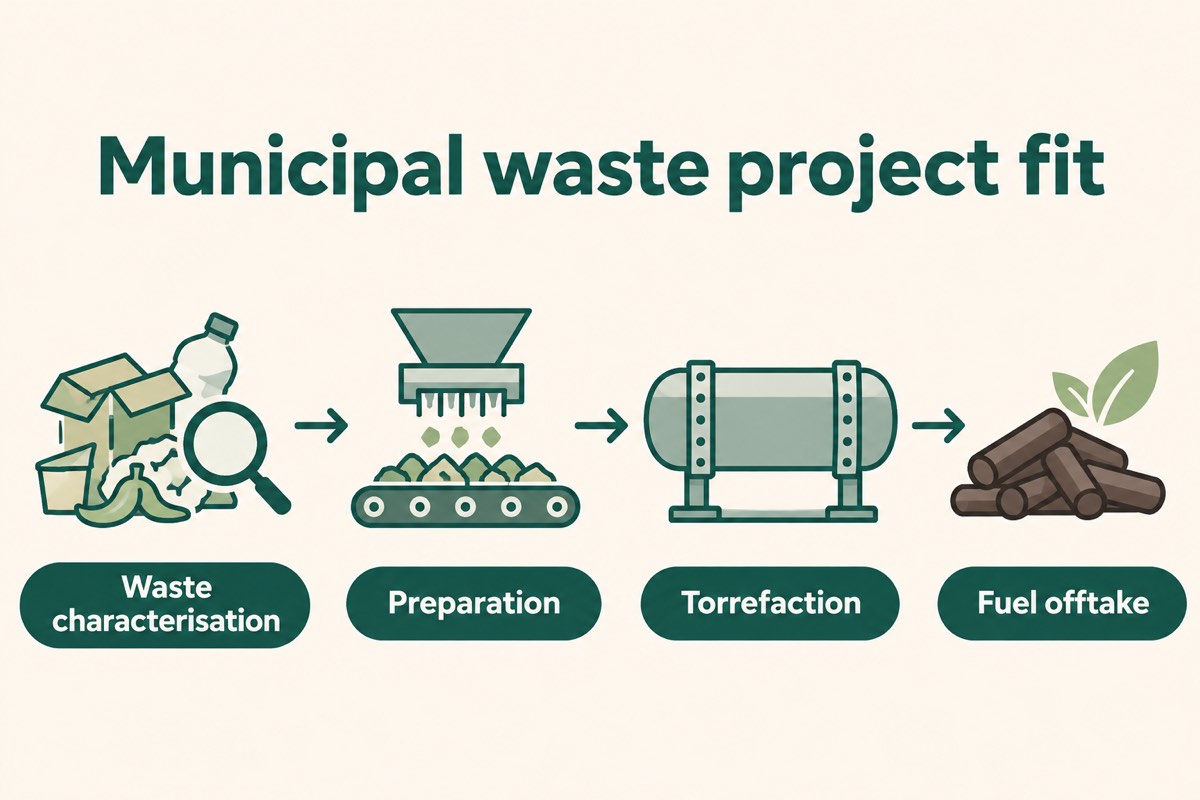
A municipal waste-to-energy decision starts with the material, not a technology label. Mixed waste varies in moisture, inert content, chlorine, particle size and biodegradable fraction. The most useful comparison asks which route can accept the documented feedstock, produce a usable output and manage every residual stream within the intended operating boundary.
Why torrefaction is often considered
For an appropriately prepared combustible fraction, torrefaction produces a dry, brittle solid fuel that can be evaluated for industrial fuel applications. Its practical value is in fuel preparation: lowering moisture where the process design supports it, improving friability, and providing a solid material that can be sampled, stored and tested. These are project-fit questions, not proof that every municipal input will meet a fuel specification.
Compare like with like
Ask each option for the same evidence: incoming composition and moisture; separation performance; auxiliary energy; output analysis; emissions-control boundary; residue destinations; availability; and receiving-user requirements. A comparison is not reliable when one route is measured at reactor outlet and another includes drying, gas cleaning, power conversion or final ash handling.
Distinguish the product the project must deliver
Torrefaction is a solid-fuel preparation route. Gasification converts prepared carbonaceous feed into a gas stream for further use or processing. Combustion projects recover heat from burning fuel. Pyrolysis routes divide material among solid, liquid and gaseous products according to their operating conditions. These descriptions identify different project boundaries; their outputs should not be ranked as if they were interchangeable tonnes of product.
For a municipality with a suitable combustible fraction and a defined industrial fuel outlet, a torrefaction assessment can focus on fuel quality, handling and dispatch. The downstream user can then evaluate the solid against its own acceptance specification. IEA Bioenergy’s torrefaction study describes the potential handling and supply-chain benefits, while showing why processing energy, moisture and transport distance still belong in the assessment.
Write a comparison brief that exposes the real decision
Start with a representative waste audit and identify the material entering each candidate process after sorting. Ask for separate quantities for received waste, removed fractions, prepared feed and accepted product. A supplier quoting throughput at the prepared-feed inlet is describing a different capacity from a municipal receiving facility.
Then fix the output duty. If the buyer needs industrial heat, compare useful heat delivered at that duty rather than a fuel’s calorific value alone. If the intended product is electricity or hydrogen, include the additional conversion, cleaning and delivery stages. Link the operating-cost estimate to the same equipment boundary used for the output estimate.
For torrefaction, request the intended moisture and size specification, representative fuel analysis, storage and handling arrangements, and acceptance conditions from the fuel user. Review the emissions and material-balance records for the proposed configuration. These details make the case for torrefaction concrete and prevent a headline technology comparison from masking a missing process stage.
Buyer checklist
- Define the acceptable combustible fraction and exclusions.
- Require representative sampling across the proposed supply window.
- Specify the output test basis, including GCV or NCV and moisture.
- Confirm the end user’s handling, milling and acceptance requirements.
- Review residue and emissions evidence for the full stated boundary.
Keystone’s focus is torrefaction for waste-derived solid-fuel preparation. The original Warangal project film shows the site and equipment. For a project discussion, share the incoming-material evidence and intended fuel duty with Keystone.
References and next steps
- IEA Bioenergy, Biomass torrefaction case study.
- IEA Bioenergy, MSW pretreatment case study.
- US Department of Energy, biomass gasification process context.
Explore KeyTor technology, use the feedstock guide to organise your data, and discuss the proposed plant with Keystone.
Discuss a torrefaction plant
For EPC projects, technology licensing or equipment supply:


Phone
+91 011-69952419Copyright © 2026 Keystone Energy Systems LLP and Keystone Green Energy Pvt. Ltd. All rights reserved.