Torrefaction provides a fuel-preparation step for an integrated emissions-control strategy. Assess the feed, solid fuel, process gases and treatment system together, and compare measured results on the same operating basis.
Torrefaction Emissions: Dioxins, Chlorine and Plant Testing
In brief
Summary
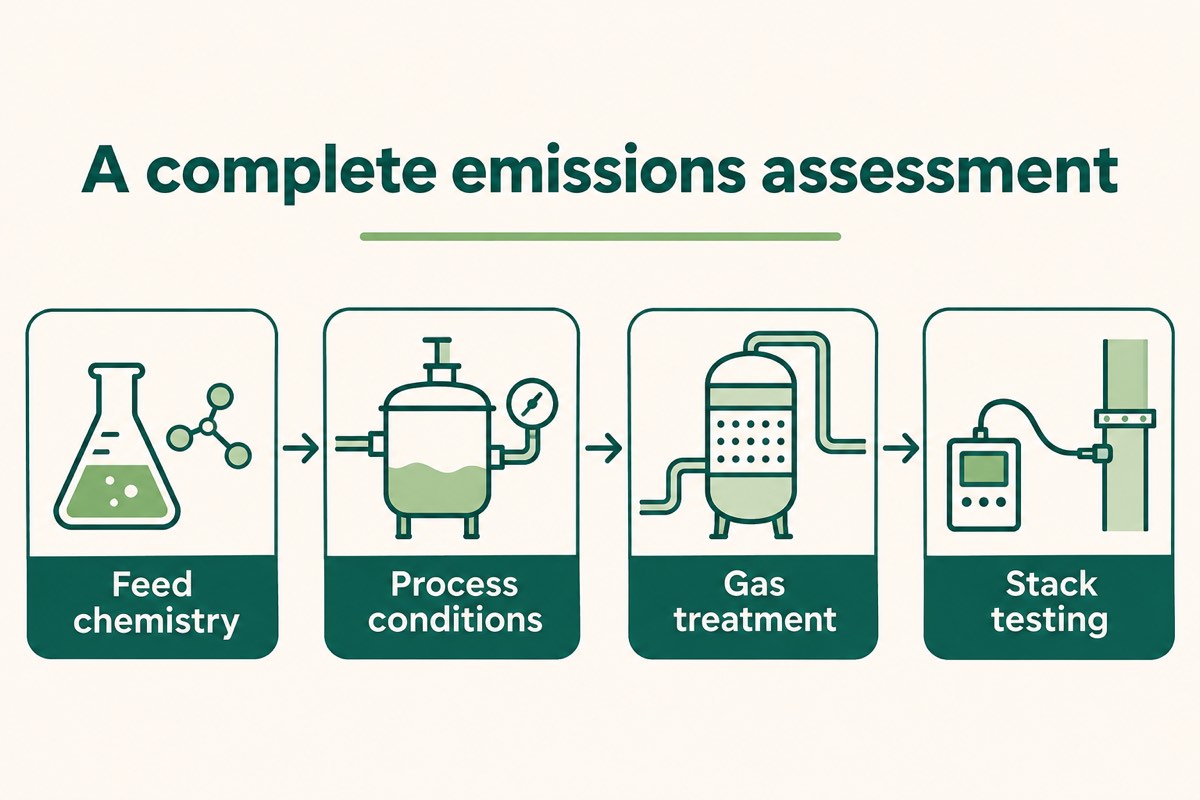
Torrefaction creates an opportunity to control fuel quality before the fuel reaches its final user. Its oxygen-limited thermal treatment changes the solid and releases volatile material. A credible emissions assessment follows both streams: the torrefied fuel and the process gases, together with the equipment that treats or uses them.
For buyers evaluating Keystone’s KeyTor torrefaction technology, the useful question is precise: which feedstock, operating conditions and gas-treatment system deliver the required result? A reactor temperature alone is not a stack-emissions measurement.
What research establishes about dioxins
Han and colleagues tested torrefaction followed by pyrolysis using a model mixture of poplar sawdust and PVC. In their laboratory configuration, torrefaction reduced the total measured dioxin quantity by 98.63% and reduced chlorine participation in the subsequent pyrolysis by 86.94%, with chlorine released mainly as hydrogen chloride. This is strong evidence of a pretreatment mechanism in that particular system. It is not a measured reduction for a Keystone installation or an untreated mixed-waste stream.
The engineering consequence is clear: removing chlorine from the solid moves it into another stream that must be managed. Feed preparation, gas handling and treatment belong in the design and in the comparison. Research by Edo and colleagues on waste wood, MSW and RDF also examined metals and organic pollutants across torrefaction products. Feed composition matters; a result from one waste blend does not establish the result for another.
Separate local pollutants from greenhouse-gas accounting
Dioxins, particulates and acid gases are different assessment questions from lifecycle greenhouse-gas emissions. Each needs its own measurement boundary. A lower transport-energy requirement cannot substitute for a stack test, and a compliant stack result cannot establish a lifecycle carbon saving.
IEA Bioenergy’s torrefaction supply-chain case study explains how higher energy density and improved handling interact with additional processing energy. Its modelled advantages depend on the route, moisture and other assumptions. For a proposed plant, calculate the actual chain from incoming material through treatment, transport and fuel use.
Specify the comparison before commissioning the test
A useful buyer specification records the incoming material, throughput, operating mode and tested discharge points. Agree the sampling locations and methods before comparing suppliers. Ask for the laboratory report with the operating log, not only a brochure number.
- Feed: representative composition, moisture, chlorine, ash and relevant metals, with sampling dates and batch identification.
- Operation: feed rate, temperatures, residence time, oxygen conditions, auxiliary fuel and the gas-treatment equipment operating during sampling.
- Emissions: pollutant, concentration units, dry or wet gas basis, reference oxygen where applicable, sampling duration and detection limits.
- Other streams: condensate, collected dust, treatment residue and the specification of the dispatched solid fuel.
- Comparison: the same functional output, feed conditions and system boundary, with startup and abnormal-operation coverage stated separately.
Make the torrefaction advantage measurable
Build the procurement case around controlled fuel preparation and a complete treatment system. Define the intended fuel user, acceptance specification and emissions test programme together. This turns the technical opportunity into a result that an operator and buyer can verify.
Start with Keystone’s feedstock-characterisation guide, then share your feedstock and project requirements. For the physical plant context, the Warangal project film shows the site and equipment.
References
- Han et al. (2021), Effects of torrefaction on the formation and distribution of dioxins during wood and PVC pyrolysis.
- Edo et al. (2017), Fate of metals and emissions of organic pollutants from torrefaction of waste wood, MSW, and RDF.
- IEA Bioenergy (2018), Biomass torrefaction supply-chain case study.
Discuss a torrefaction plant
For EPC projects, technology licensing or equipment supply:


Phone
+91 011-69952419Copyright © 2026 Keystone Energy Systems LLP and Keystone Green Energy Pvt. Ltd. All rights reserved.